
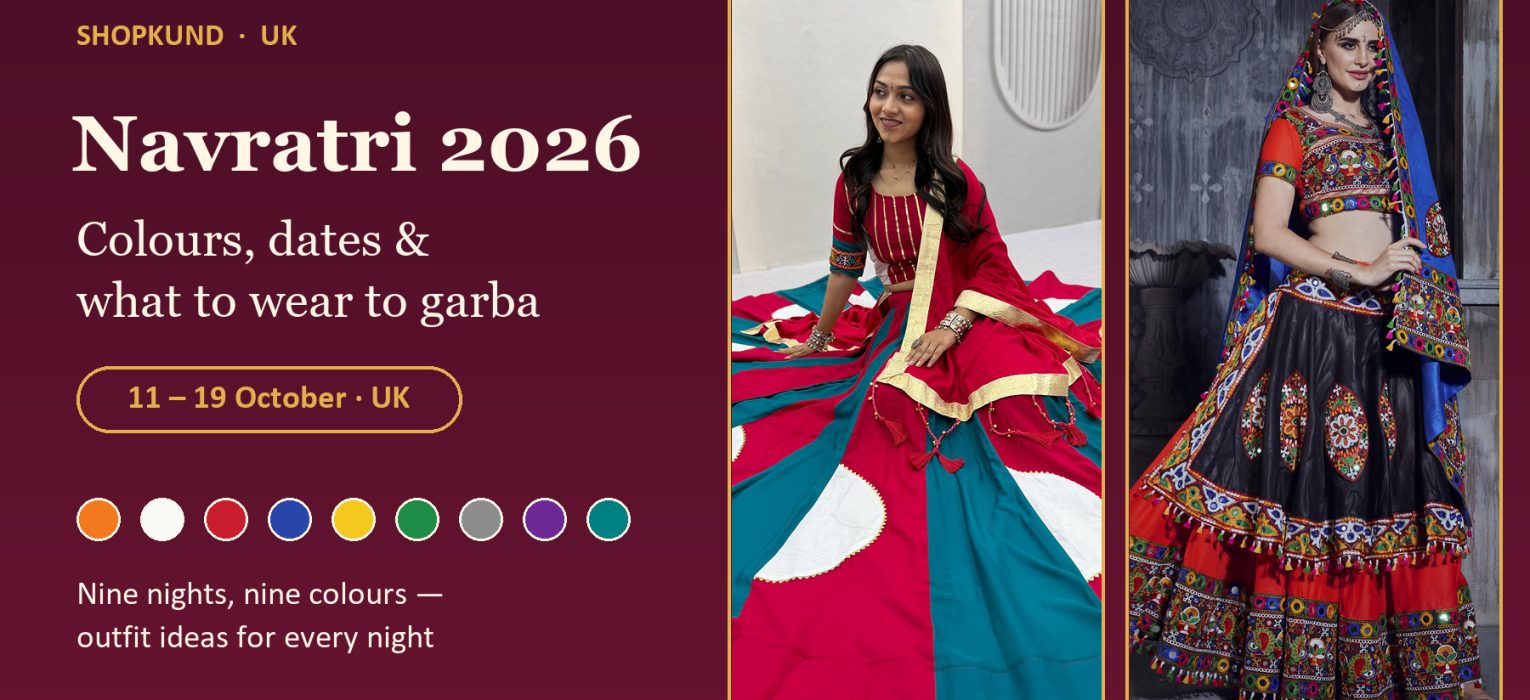
Sharad Navratri 2026 runs from Sunday 11 October to Monday 19 October in the UK, with Vijayadashami (Dussehra) on Tuesday 20 October.
Each of the nine nights has its own colour — orange, white, red, royal blue, yellow, green, grey, purple and peacock green — and for most UK garba-goers the outfit of choice is a light, full-flared chaniya choli that you can dance in for hours.
This guide gives you the UK dates and colours in one table, explains what actually works on a crowded hall floor, and links to pieces from our Navratri collection for each night.
Navratri 2026 UK dates and colours
Dates and colours below are taken from the Drik Panchang calendar for London. In India, Durga Ashtami and Maha Navami both fall on 19 October this year; in the UK, Ashtami falls on Sunday 18 October and Navami on Monday 19 October.
| Night | Date (UK) | Colour | Puja |
| 1 | Sunday 11 October | Orange | Ghatasthapana, Shailputri Puja |
| 2 | Monday 12 October | White | Brahmacharini Puja |
| 3 | Tuesday 13 October | Red | Chandraghanta Puja |
| 4 | Wednesday 14 October | Royal Blue | Kushmanda Puja |
| 5 | Thursday 15 October | Yellow | Skandamata Puja |
| 6 | Friday 16 October | Green | Katyayani Puja |
| 7 | Saturday 17 October | Grey | Kalaratri Puja |
| 8 | Sunday 18 October | Purple | Durga Ashtami, Mahagauri Puja |
| 9 | Monday 19 October | Peacock Green | Maha Navami |
| — | Tuesday 20 October | — | Vijayadashami (Dussehra) |
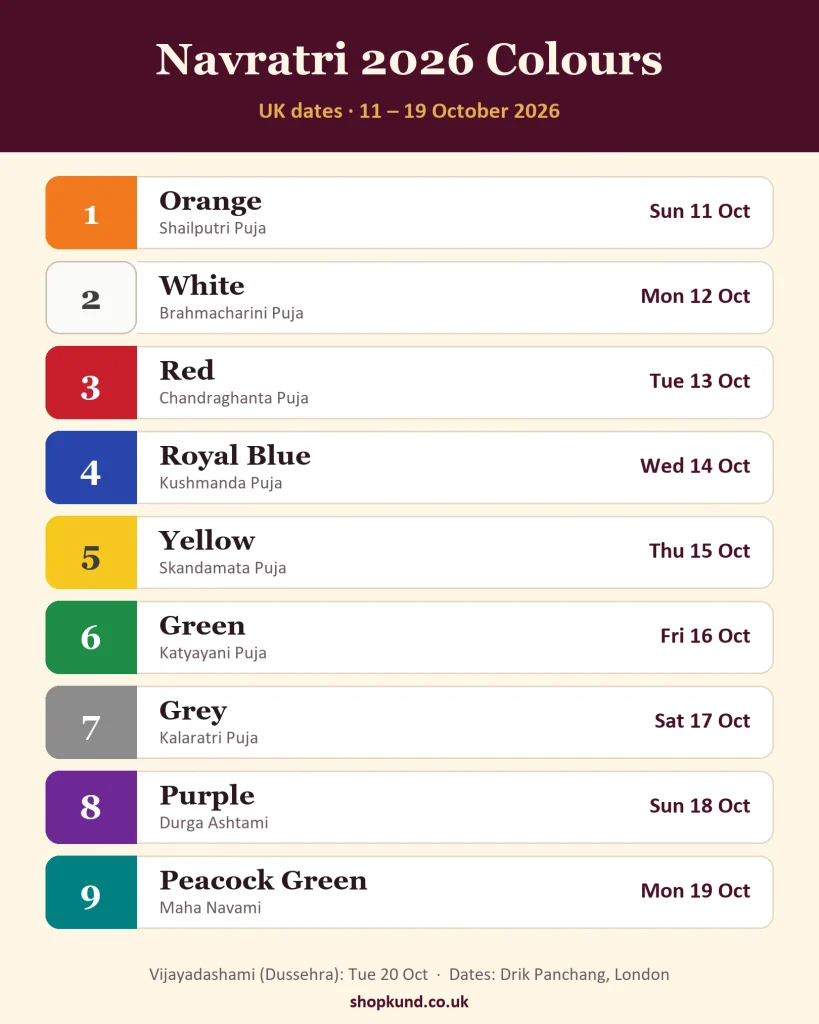
Following the colour of the day is a tradition, not a rule. If you only have one or two outfits for the season, nobody at a UK garba will mind — the colour guide is simply a fun way to plan.
What to wear to garba in the UK
Garba in Britain looks a little different from garba in Gujarat. Most nights take place indoors — in community halls, temple halls and leisure-centre sports halls — and Leicester’s Navratri celebrations alone draw tens of thousands of people across the nine nights. That shapes what works:
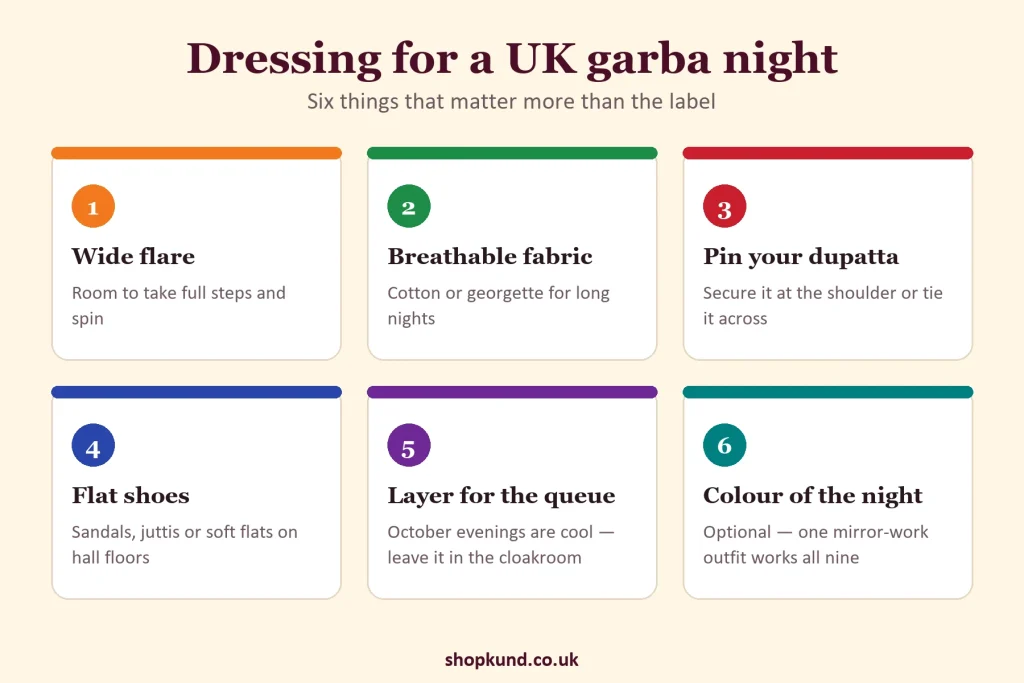
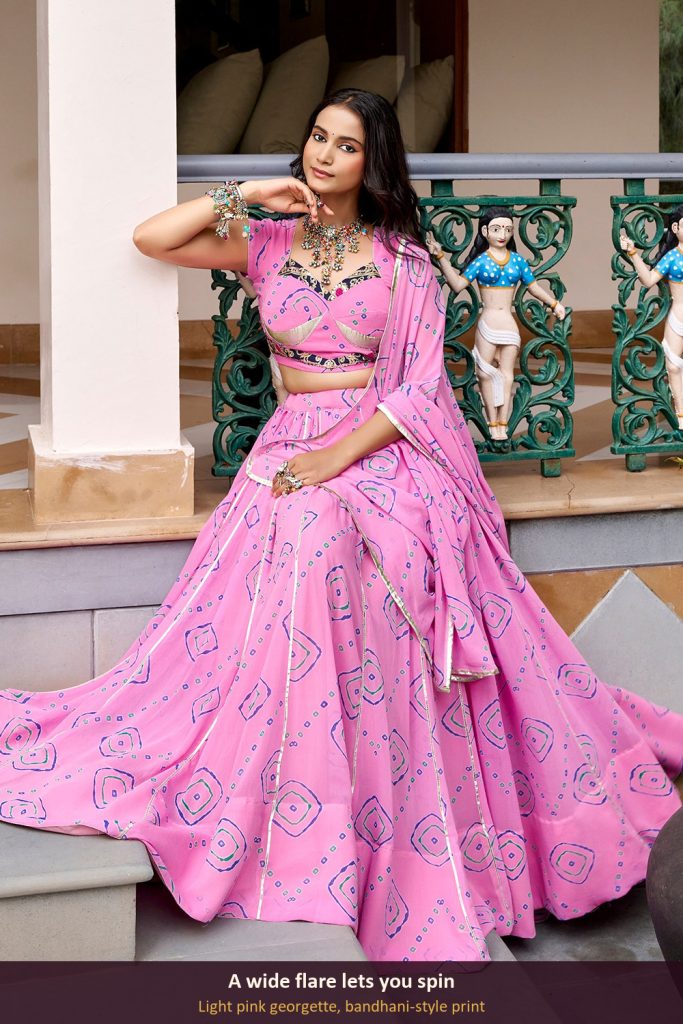
- You will dance for hours on a hard floor. Choose a skirt with a wide flare that lets you take full steps and spin, and avoid anything heavy enough to drag.
- Halls get warm, queues outside do not. October evenings in the UK are cool, so plan a layer for the journey and the queue — a shawl, a cropped jacket or a long cardigan you can leave in the car or cloakroom.
- Breathable fabric beats heavy work. Cotton and light silks stay comfortable through a long night; heavy bridal embroidery does not.
- Secure your dupatta. Pin it at the shoulder or tie it across the body so it stays put when you spin — and away from dandiya sticks.
- Shoes you can dance in. Flat sandals, juttis or soft-soled flats are far easier than heels on a sports-hall floor. Many people dance barefoot where the venue allows it, so check with the organiser.
Chaniya choli, lehenga choli or ghagra — what’s the difference?
People use the words almost interchangeably, but there are small differences:
- Chaniya choli is the Gujarati name for the outfit traditionally worn for garba: a full, flared skirt (chaniya), a fitted blouse (choli) and a dupatta. Mirror work, bandhani and bright prints are classic.
- Lehenga choli is the broader term for the same three-piece silhouette. Wedding lehengas are often heavier; festive and Navratri lehengas are lighter.
- Ghagra choli is another name, used especially in Rajasthan and North India, for a flared skirt and blouse.
For garba, what matters is not the name but the weight and the flare.
Outfit ideas for every Navratri colour
Below are pieces from our live collection that match each colour, plus the wider colour page if you want more choice.
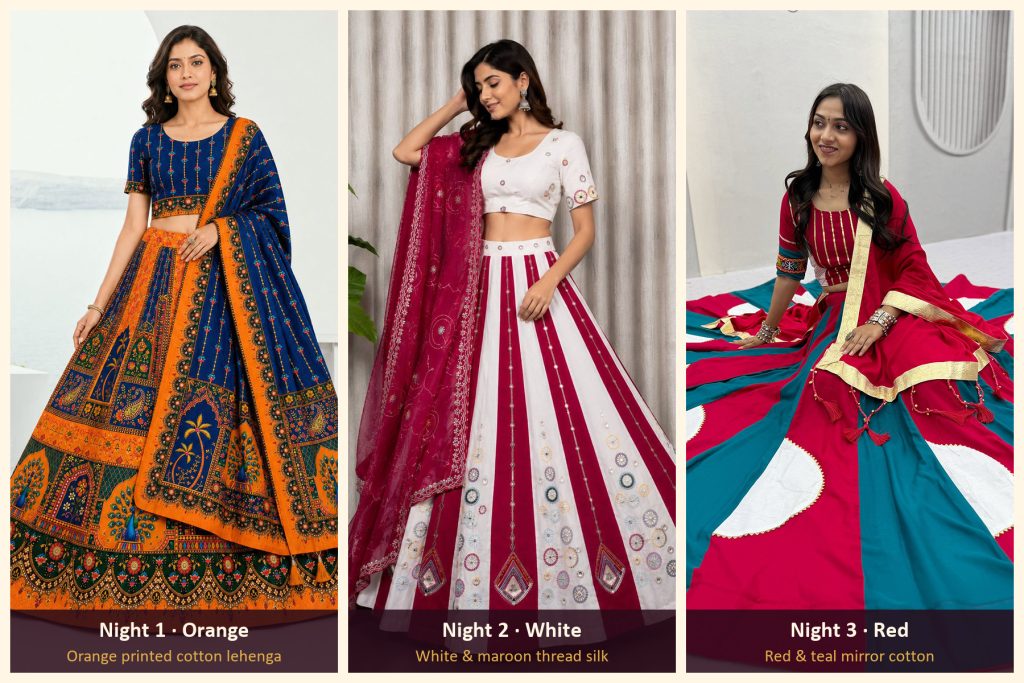
Night 1 — Orange (Sunday 11 October)
Orange is warm, bright and easy to accessorise with gold or oxidised silver. Our orange-and-navy printed cotton lehenga choli has a bright orange skirt with peacock motifs and a navy blouse and dupatta — light cotton, made for dancing. See all orange lehenga cholis.
Night 2 — White (Monday 12 October)
White works beautifully under hall lighting. The white thread silk lehenga choli has white panels with maroon stripes and a maroon dupatta, so it stays festive rather than plain. For a lighter option, the cream printed cotton lehenga choli is printed with garba dancers — a fun choice for the night. More in white lehenga cholis.
Night 3 — Red (Tuesday 13 October)
Red is the most traditional festival colour. The red-and-teal cotton lehenga choli with mirror work has a very full, panelled flare that opens up when you spin. Browse more red lehenga cholis.
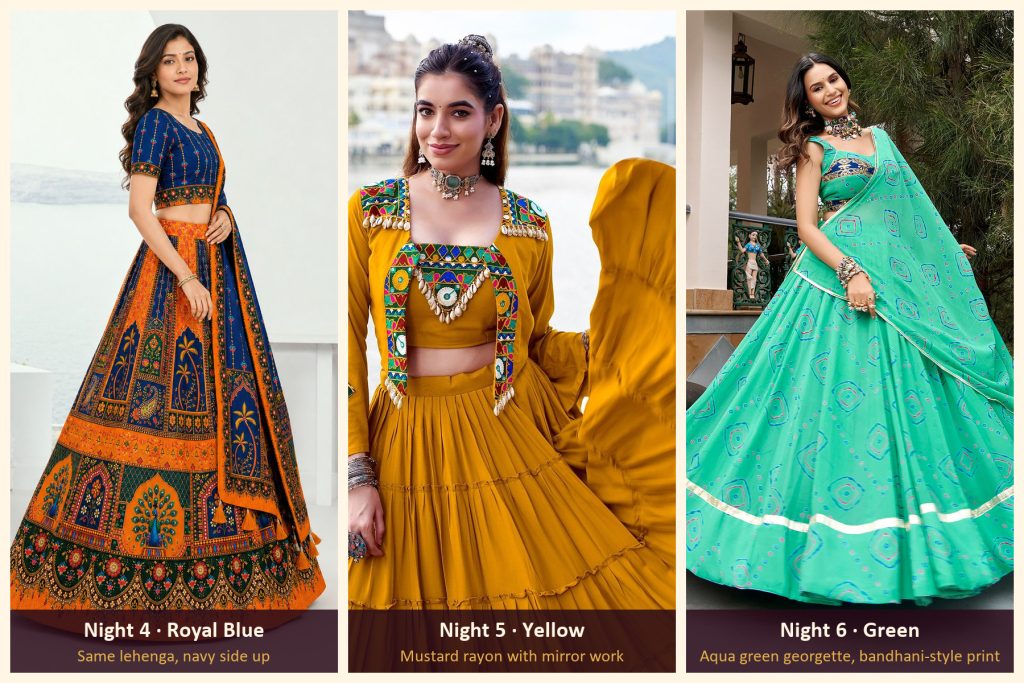
Night 4 — Royal Blue (Wednesday 14 October)
You do not need a new outfit for every night. The orange-and-navy printed cotton lehenga choli from Night 1 works again here — let the navy blouse and dupatta lead. If you prefer a deeper, all-blue look, try the navy blue thread silk lehenga choli. See all blue lehenga cholis.
Night 5 — Yellow (Thursday 15 October)
Yellow is cheerful and photographs well indoors. The mustard rayon lehenga choli with mirror work has a tiered skirt and a mirror-work blouse — a classic garba look that moves well. Browse more yellow lehengas.
Night 6 — Green (Friday 16 October)
The aqua green georgette lehenga choli with lace border has a bandhani-style print and a light georgette skirt that moves well. More in green lehenga cholis.
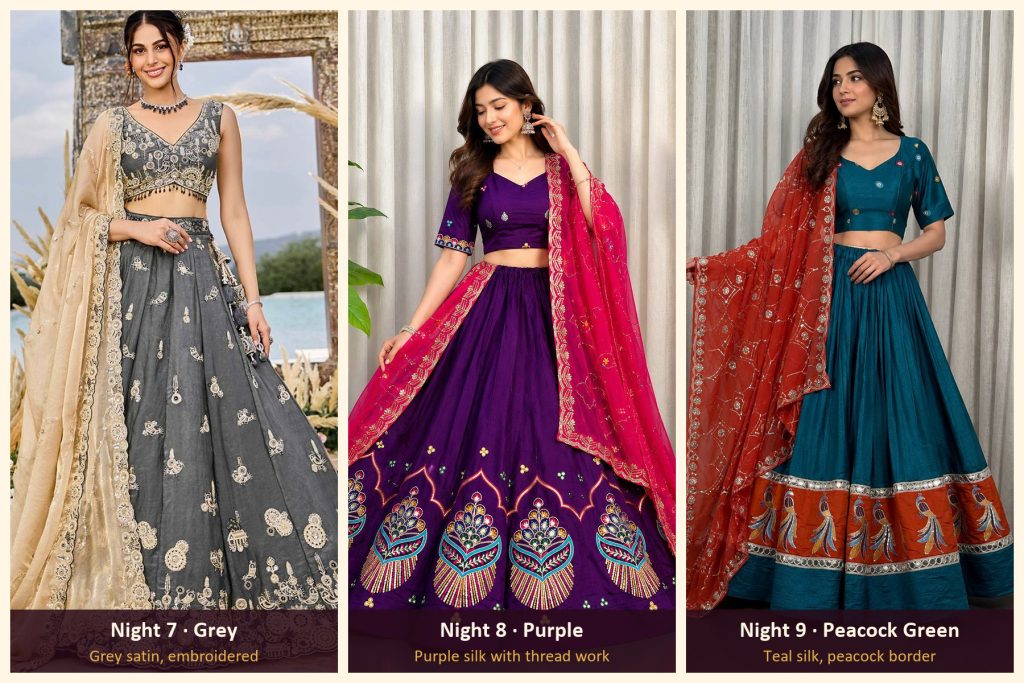
Night 7 — Grey (Saturday 17 October)
Grey is the hardest Navratri colour to find in festive wear, and our grey lehenga cholis are a smaller, more premium range. The embroidered grey satin lehenga choli with a nude dupatta is a dressier choice for a Saturday-night garba. An easy alternative: wear a white or black outfit with a silver or grey dupatta and silver jewellery — it keeps the colour of the day without buying a new outfit.
Night 8 — Purple (Sunday 18 October, Durga Ashtami)
The purple silk lehenga choli with thread work has peacock embroidery along the hem and a bright pink dupatta — a good choice for a dressier Ashtami evening. For a deeper shade, try the wine silk lehenga choli with thread work; for something lighter to dance in, the purple printed cotton lehenga choli. See all purple lehenga cholis.
Night 9 — Peacock Green (Monday 19 October, Maha Navami)
The teal silk lehenga choli with thread work is close to a true peacock green, finished with a peacock-motif border and an orange dupatta — an easy match for the last night.
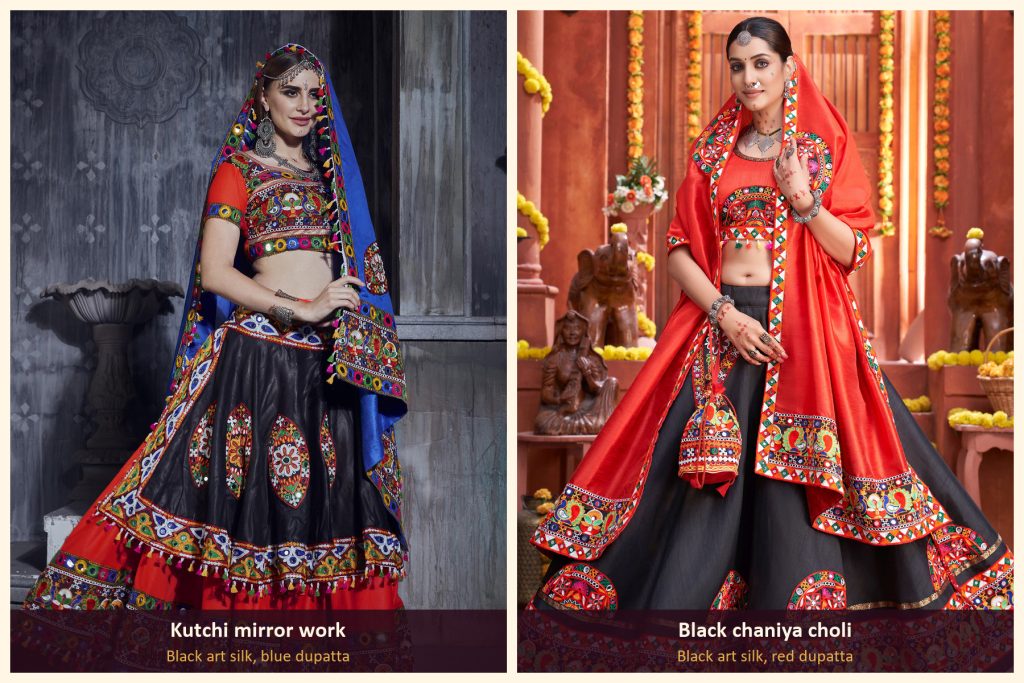
For any night: mirror work and black
If you want one outfit that feels like garba on every night, choose mirror work. The black art silk chaniya choli with Kutchi mirror work pairs a black skirt with a bright orange-red blouse and a royal blue dupatta; see the full mirror work lehenga range. Black is a popular garba choice because it makes embroidery and bright dupattas stand out — try the black art silk Navratri chaniya choli with its red dupatta, or the black silk lehenga choli with sequins.
Not a lehenga person? Other outfits that work for Navratri
- Sharara or palazzo suits give you full movement with less fabric to manage — see sharara suits.
- Anarkali suits are a good choice for puja and temple visits, and you can still dance in a flared anarkali — see anarkali suits.
- Sarees suit Ashtami puja or a dressier evening, but are harder to dance in for hours. If you wear one, pin the pleats and pallu securely.
Choosing the right fabric
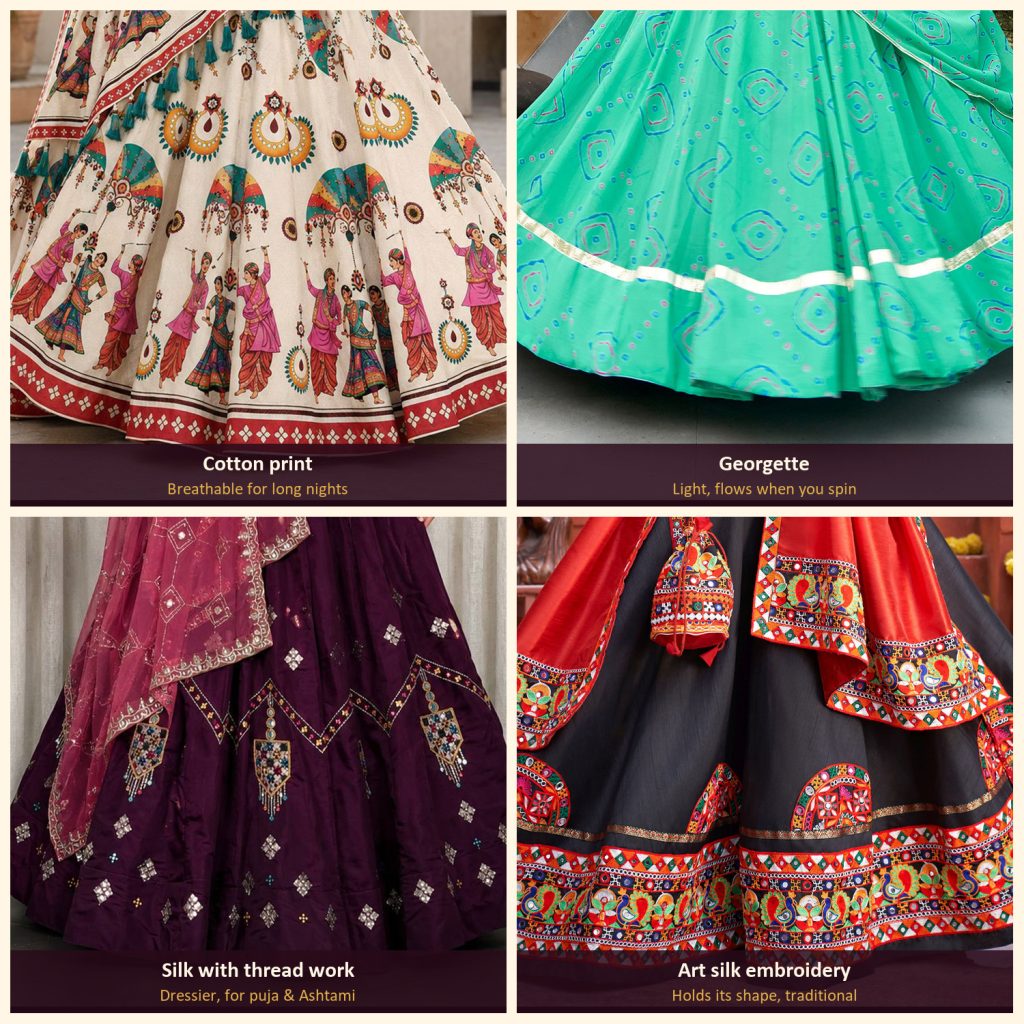
| Fabric | Best for | Why |
| Cotton (printed or mirror work) | Long garba nights | Breathable, light, easy to dance in |
| Georgette | Dancing and spinning | Light and flowing; drapes well |
| Silk with thread work | Puja, Ashtami, dressier evenings | Rich colour and a festive finish; slightly heavier |
| Art silk with embroidery | Traditional look | Holds its shape; more structured |
Buying online in the UK: what to check
- Delivery time. UK orders are delivered in 2–3 working days. If you are buying for a particular night, order a few days ahead to allow for the weekend.
- Shipping cost. UK delivery is free under our delivery policy.
- Size. Check the size guide before ordering, especially the blouse measurements.
- Plan ahead for Dussehra, Karva Chauth and Diwali. If you are shopping for the rest of the festive season, see our Diwali collection.
Frequently asked questions
What are the Navratri colours for 2026?
In order, the nine colours for Sharad Navratri 2026 are orange (11 October), white (12), red (13), royal blue (14), yellow (15), green (16), grey (17), purple (18) and peacock green (19), based on the Drik Panchang calendar for London.
When does Navratri start and end in the UK in 2026?
Navratri begins on Sunday 11 October 2026 with Ghatasthapana and the ninth day, Maha Navami, is Monday 19 October. Vijayadashami (Dussehra) is on Tuesday 20 October 2026.
Are Ashtami and Navami on the same day in 2026?
Not in the UK. In London, Durga Ashtami is on Sunday 18 October and Maha Navami on Monday 19 October 2026. In India both fall on 19 October, because each lunar day (tithi) is counted from local sunrise, so the dates can differ by location.
What is the dress code for garba?
There is no strict dress code. Most people wear a chaniya choli or lehenga choli; sharara suits, anarkalis and kurtas are also common. Choose something light enough to dance in, and check whether your venue expects shoes off.
Can I wear a lehenga to garba?
Yes. A festive lehenga choli is essentially the same silhouette as a chaniya choli. Avoid heavy bridal lehengas — they are tiring to dance in for a full night.
What shoes should I wear to garba?
Flat sandals, juttis or soft-soled flats are the most comfortable on hall floors. Some venues allow dancing barefoot.
What should I wear over my Navratri outfit in UK weather?
Bring a shawl, cropped jacket or long cardigan for the journey and the queue, and leave it in the cloakroom or car once you are inside the hall.


