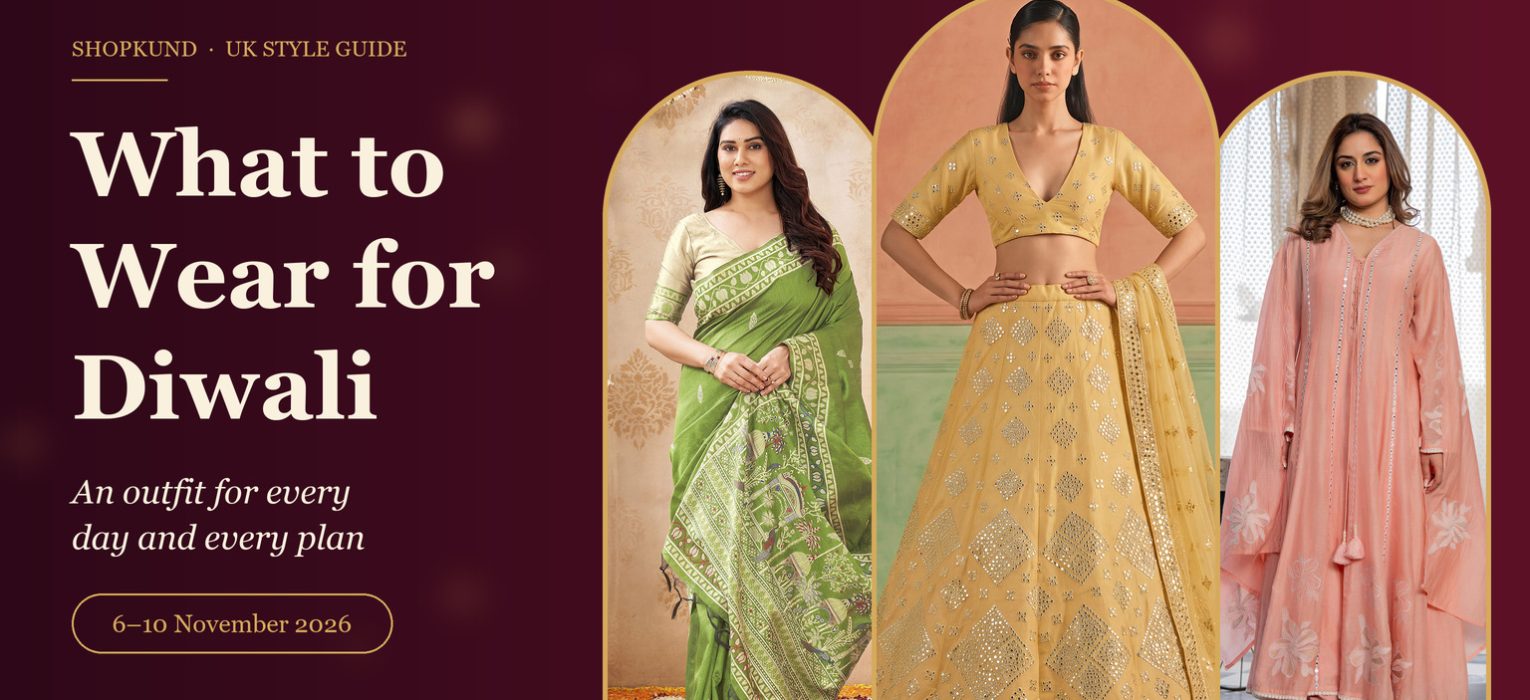
Diwali 2026 in the UK runs from Friday 6 November (Dhanteras) to Tuesday 10 November (Bhai Dooj), with the main Lakshmi Puja on Sunday 8 November. For the puja at home, a silk saree or silk suit is the safe choice. For a party, go for a lehenga, a sequin saree or a sharara. Whatever you wear, plan for a cold November evening and for open flames from diyas.
This guide does not list “50 outfit ideas”. It works the other way round: start with what you are actually doing on each day of Diwali in the UK, then pick the outfit that suits it.
Diwali 2026 dates in the UK
Dates below are for London, from Drik Panchang’s Diwali calendar. Other UK cities follow the same dates.
| Day | UK date | What usually happens | How dressed up |
| Dhanteras | Friday 6 November | Buying gold, silver or new utensils, often after work | Smart, easy to wear from the office |
| Choti Diwali (Narak Chaturdashi) | Saturday 7 November | Cleaning, rangoli, cooking, visiting family | Comfortable, but nice enough for guests |
| Diwali — Lakshmi Puja | Sunday 8 November | Puja at home or the mandir, diyas, family dinner, fireworks | Your best outfit of the week |
| Govardhan Puja / Annakut | Monday 9 November | Annakut food offerings at many mandirs; New Year (Bestu Varas) for many Gujarati families | Modest and traditional |
| Bhai Dooj | Tuesday 10 November | Sisters do tilak for brothers, usually on a weeknight | Simple and quick to put on |
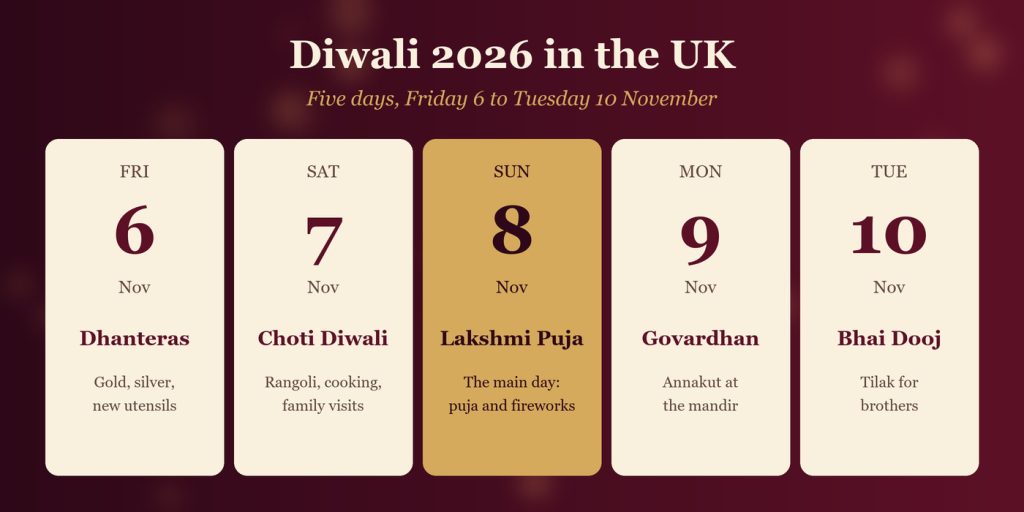
The five days of Diwali 2026, with dates for London
Because the main day falls on a Sunday this year, most families will do the puja, dinner and fireworks on the same evening. That is the outfit worth spending on. The other four days are working days for most people in the UK, so lighter outfits make more sense.
Pick your outfit by plan
1. The puja at home
The puja is the most traditional part of Diwali. You will sit on the floor, move around a small space, and be close to diyas and incense.
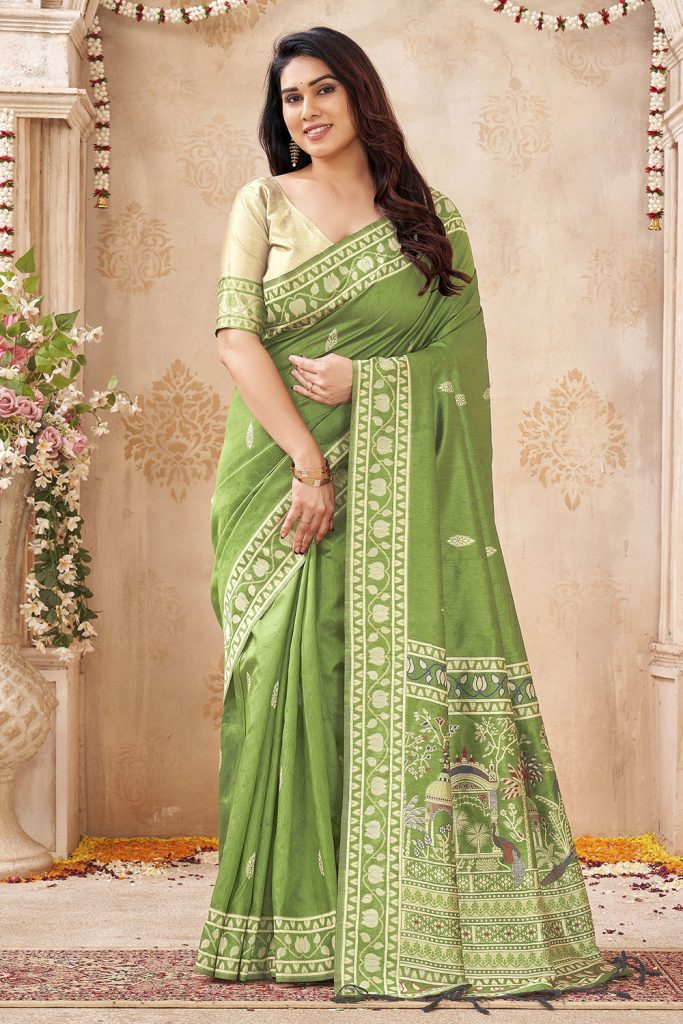
- Best choice: a silk or silk-blend saree, or a silk anarkali with a dupatta.
- Why: silk looks right in photos next to gold and brass puja items, and it does not crease badly when you sit.
- Keep the dupatta pinned. A loose dupatta near a row of diyas is the most common Diwali clothing accident.
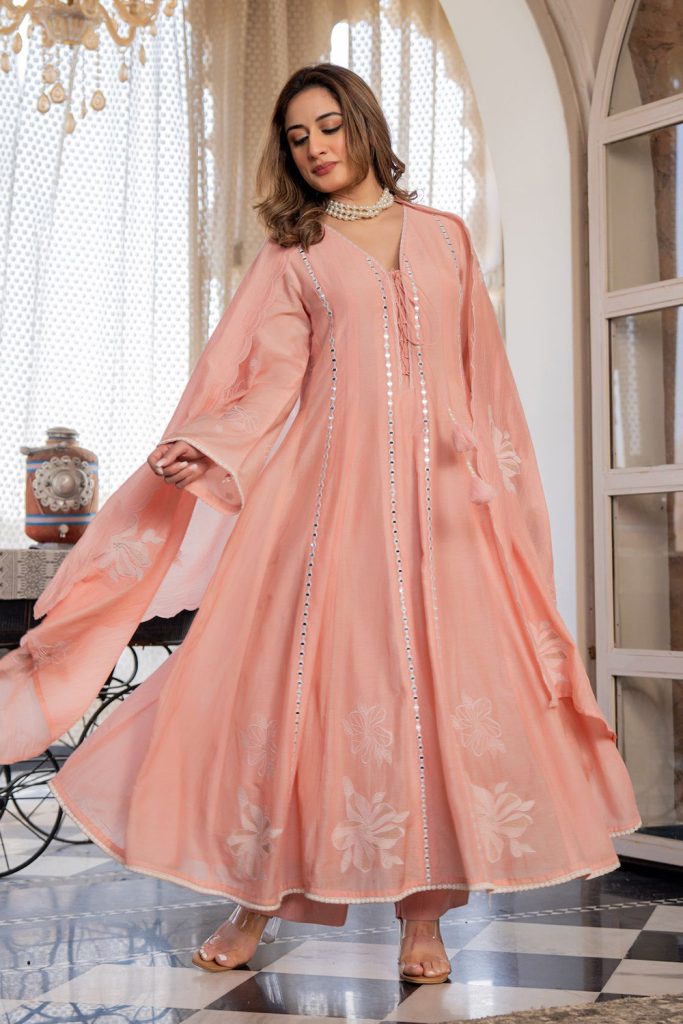
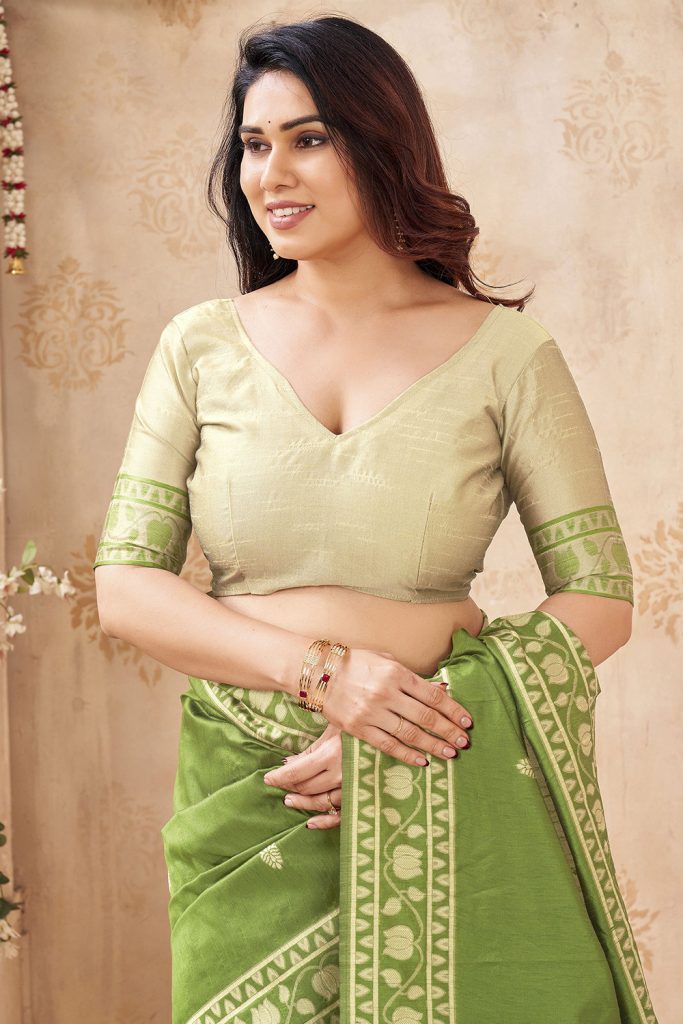
- Try: the Green raw silk saree with weaving, the Cherry raw silk saree, or the Pink Chanderi anarkali. More in the Diwali saree collection.
2. Visiting the mandir
Many UK families visit a mandir on Diwali or for Annakut the next day. Mandirs get very busy, you will take your shoes off at the entrance, and you may stand for a long time.
- Best choice: a salwar kameez, sharara suit or anarkali that covers the shoulders and knees, with a dupatta you can put over your head if asked.
- Shoes: pick something you can slip off and on quickly, because there will be a queue at the shoe racks.
- Check first: most mandirs ask for modest clothing. Look at the visitor guidance on your mandir’s own website before you go.
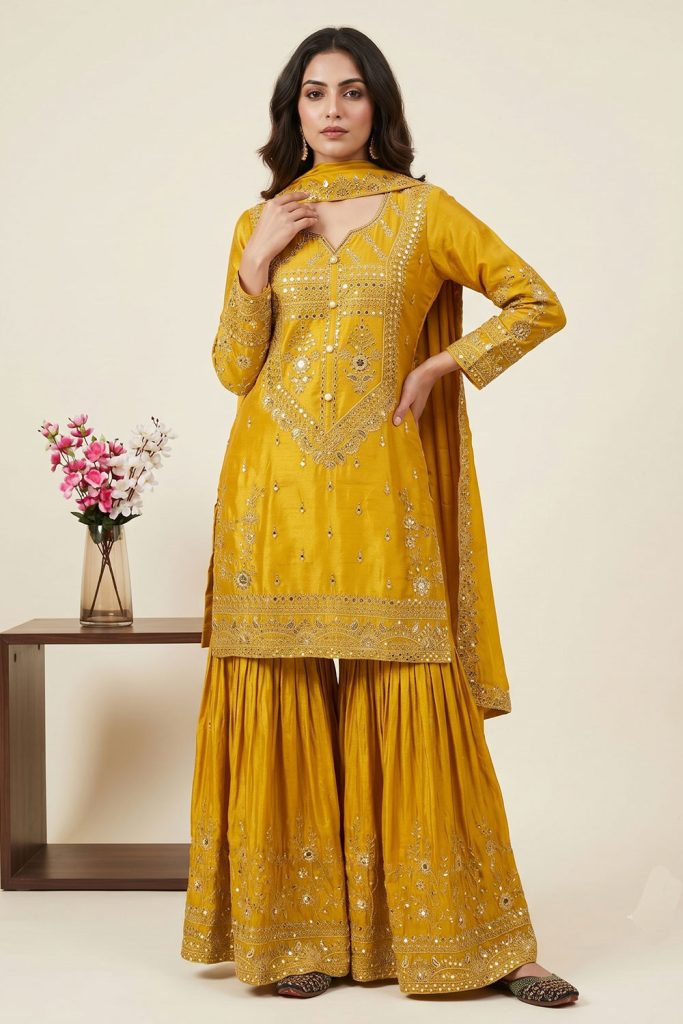
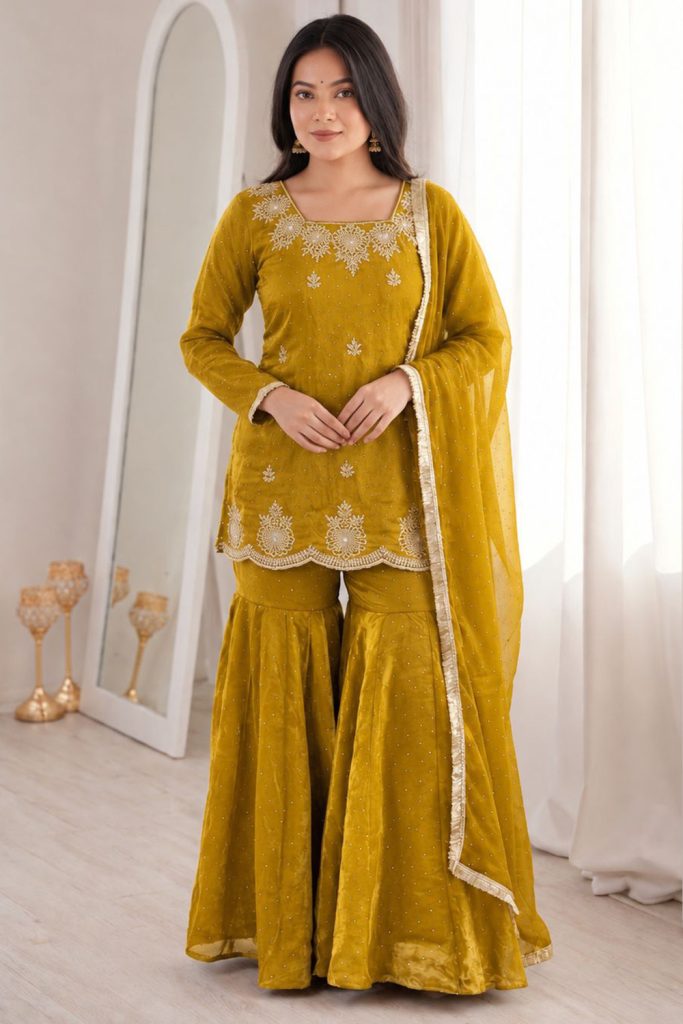
- Try: the Yellow embroidered silk sharara suit or the Red silk anarkali. See all anarkali suits.
3. The Diwali do at work
Many UK offices, schools and hospitals now hold a Diwali lunch or celebration. Usually this is in the week before Diwali or on Dhanteras (Friday 6 November this year).
- Best choice: a printed anarkali, a sharara set or a straight kurti with trousers. It should look festive but still work at your desk.
- Layer it: a plain wool coat or a fitted blazer over an anarkali looks smart and keeps you warm on the commute.
- Skip: heavy lehengas and long trailing dupattas on public transport.
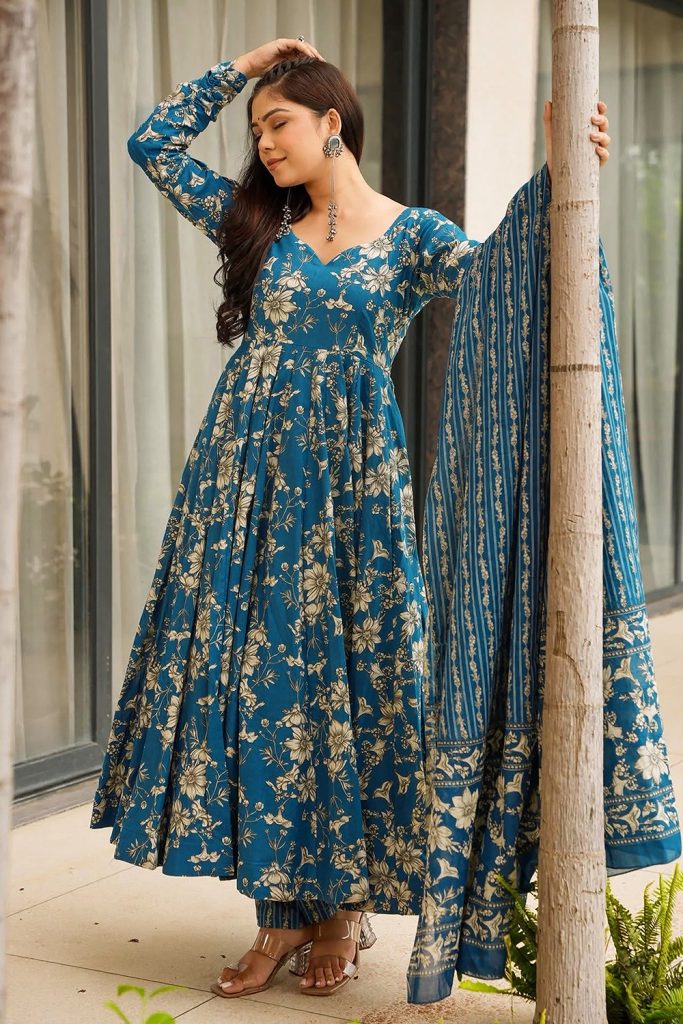
- Try: the Blue printed muslin anarkali or the Mustard silk sharara suit. More sharara suits and kurtis.
4. The Diwali party or big family dinner
This is where you can go all out. A Sunday Diwali means the party usually starts after the puja, so you may be in the same outfit for six hours or more.
- Best choice: an organza or net lehenga, a sequin saree, or a sequin palazzo set if you want to dance.
- Comfort test: sit down and stand up in it at home before the day. If the blouse pinches after ten minutes, it will hurt after six hours.
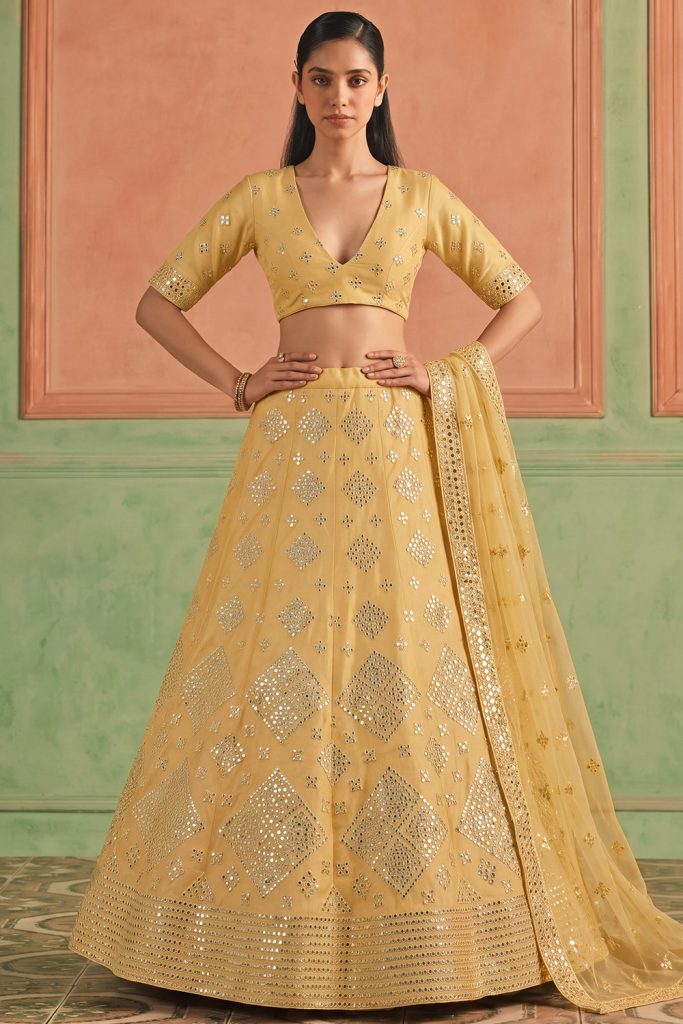
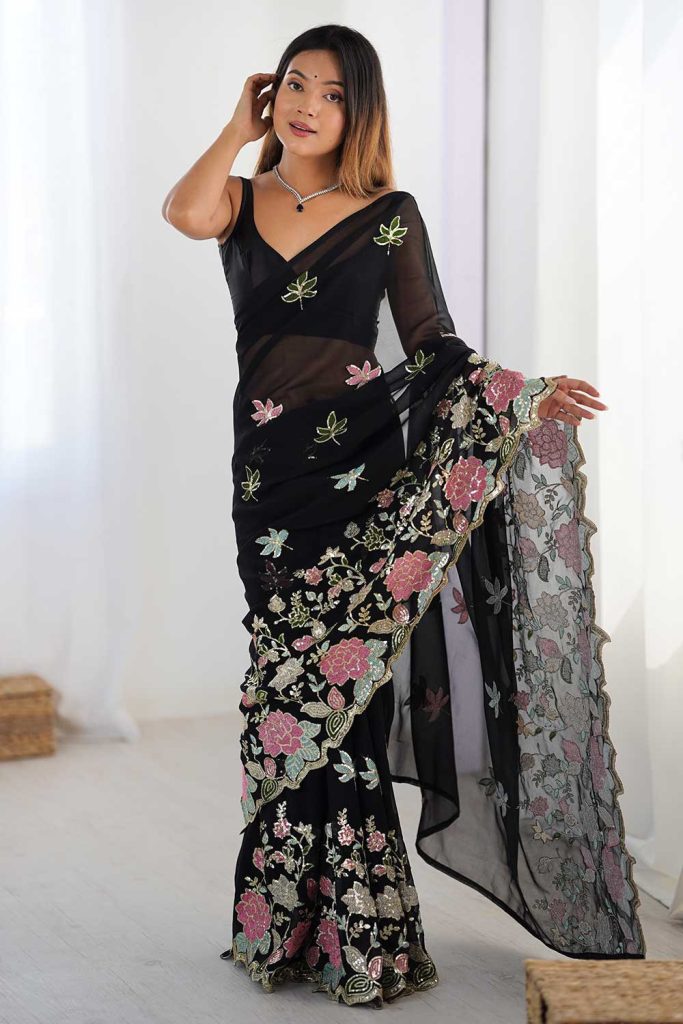
- Try: the Yellow organza lehenga choli, the Pink organza lehenga choli, the Black sequin georgette saree or the Maroon sequin palazzo suit. See the Diwali lehenga collection and Indo-western outfits.
5. Fireworks, sparklers and the Diwali lights
Some families have fireworks in the garden. Others go to the lights and events on Belgrave Road in Leicester or to their local temple’s display. In both cases you will be outside on a November evening, near sparklers.
- Fabric matters here. Many festive fabrics such as georgette, net, organza and satin are synthetic. Synthetic fabric can melt when it touches a flame. Cotton and silk are a better choice near sparklers, and in any case keep dupattas and loose sleeves well away from fire.
- Wear a coat. Nobody will judge a long coat over a lehenga outdoors. Take it off when you go back inside for photos.
- Shoes: pavements and gardens are often wet in November. Flat juttis or ankle boots are easier than heels on grass.
- Try: a cotton outfit such as the Blue printed cotton anarkali.
6. Bhai Dooj on a weeknight
Bhai Dooj falls on Tuesday 10 November, so for most families it will be after work and school. Keep it simple: a kurti set, a light anarkali, a mustard silk sharara suit, or a saree you can drape in ten minutes. Wearing your Diwali outfit again is completely normal.
Diwali colours: is there a “right” colour?
Navratri has a set colour for each night. Diwali does not, which is why searches for “Diwali colours” are so mixed. What you will see most in UK families is:
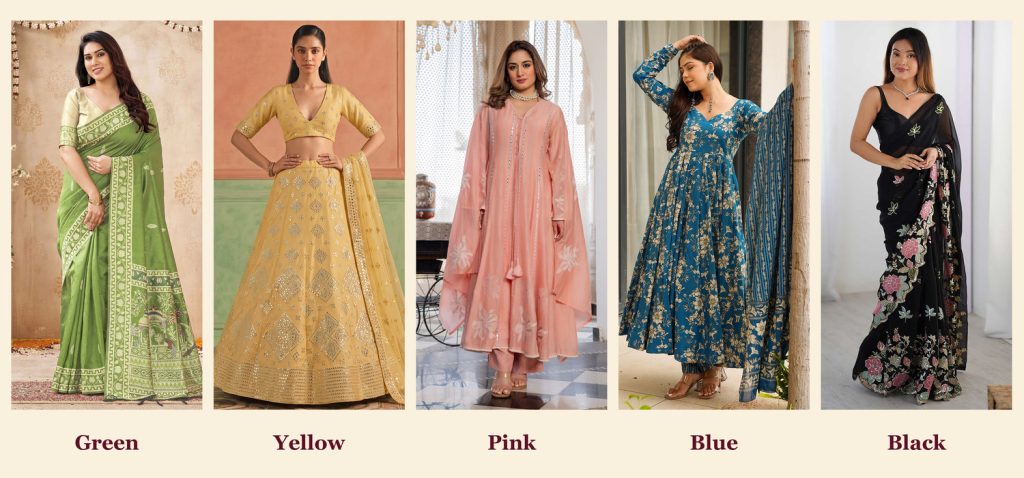
- Red and maroon: traditional and festive, very common for married women at the puja.
- Yellow, gold and mustard: bright, warm and good in photos next to diya light.
- Pink and magenta: a softer festive choice that suits both the puja and the party.
- Green and teal: popular for sarees and lehengas, and a good match with gold jewellery.
- Blue: less traditional than red, but a fresh choice for a daytime celebration.
- Pastels (pista, peach, lavender): popular for daytime and for younger family members.
Can you wear black on Diwali? It depends on the family. Some families avoid black for the puja itself because they see it as unlucky. Many people wear black to Diwali parties, especially with gold or sequin work. If you are a guest, wear black to a party but choose a colour for a puja.
What about all white? In some communities plain white is linked with mourning. If you like white, pick off-white or cream with gold zari or coloured embroidery instead of plain white.
Dressing for a UK November
Most Diwali outfit advice is written for India, where early November evenings are mild. UK November evenings are usually cold and often wet. A few things that help:
- Long-sleeve or three-quarter-sleeve blouses for sarees and lehengas. They look elegant and are much warmer.
- A shawl or pashmina in a matching or neutral colour. It works over a saree, a suit or a lehenga.
- Heavier fabrics for outdoor plans: silk, raw silk and velvet keep you warmer than chiffon or net. Our older guide to saree fabrics for UK weather goes into more detail.
- A thin thermal layer under a salwar kameez or kurta is not visible and makes a big difference outdoors.
- Indoor and outdoor shoes: many homes ask guests to take shoes off. Bring a pair of juttis for indoors.
Invited to Diwali for the first time?
If a friend or colleague has invited you to their Diwali, you do not need Indian clothes. Smart, colourful clothes are fine. If you would like to wear something traditional, a simple kurti with trousers or a light anarkali is a respectful choice and easy to wear.
A few things your host will appreciate:
- Expect to take your shoes off at the door.
- Bring something sweet. A box of mithai, chocolates or dried fruit is a common Diwali gift.
- Skip all black for the puja and avoid plain white.
- Ask before taking photos during the puja itself.
Men and children
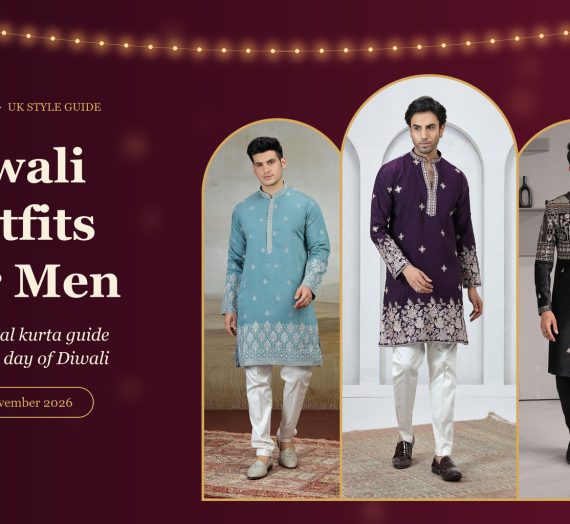
Men usually wear a kurta pyjama for Diwali, often with a dupatta or a waistcoat for the evening. See the Diwali men’s kurta collection. For children, a soft cotton or art silk kurta, or a small lehenga, is easiest. See the kids’ collection. For more ideas, read our guide to Diwali outfits for men in the UK & browse the full Diwali collection, and check your size in our size guide before ordering.
Frequently asked questions
What should I wear on Diwali?
For the puja, a silk saree, silk anarkali or silk salwar kameez. For a party, a lehenga, a sequin saree or a sharara set. In the UK, add long sleeves or a shawl for the evening.
Can you wear black on Diwali?
Yes, to a party, especially black with gold or sequin work. Some families avoid black for the puja itself, so a colour is the safer choice there.
What should I wear to a Diwali party as a guest?
Smart, colourful clothes are fine. If you want to wear Indian clothes, a kurti with trousers or a light anarkali is simple and respectful. Expect to take your shoes off at the door.
What should I wear to a mandir on Diwali?
Something that covers your shoulders and knees, such as a salwar kameez or anarkali, with a dupatta. Wear shoes that are easy to take off. Check your mandir’s own visitor guidance before you go.
When is Diwali 2026 in the UK?
The main day, Lakshmi Puja, is on Sunday 8 November 2026. The five days run from Dhanteras on Friday 6 November to Bhai Dooj on Tuesday 10 November (Drik Panchang, London).
Can I wear my Diwali outfit again for Bhai Dooj?
Yes. Bhai Dooj falls on a weeknight this year, and wearing your Diwali outfit again is common. Change the jewellery or dupatta for a different look.